Understanding Anechoic Chamber Cost: What Determines Your Investment?
When setting up an advanced RF testing facility or an electromagnetic compatibility (EMC) laboratory, accurate budgeting is crucial. One of the most important questions engineers and procurement managers face is: What is the actual cost of an anechoic chamber?
The truth is, there is no one-size-fits-all price tag. Because these testing environments require high precision, the total investment is determined by a variety of technical specifications, customization options, and performance goals. Understanding these components helps you plan your budget without compromising on testing accuracy.
As a leading anechoic chamber company, JV Micronics designs and builds high-quality, customized testing environments tailored to your exact technical and financial requirements.
Key Factors That Influence Anechoic Chamber Cost
1. Chamber Dimensions and Spatial Requirements
The physical size of the room is one of the most direct drivers of the overall anechoic chamber cost. Larger chambers naturally demand more structural steel, shielding panels, and RF absorber materials. They also involve more complex logistics, shipping, and on-site structural engineering. Selecting the optimal size for your Device Under Test (DUT) is the first step in balancing performance and cost.
2. Type of Chamber and Testing Application
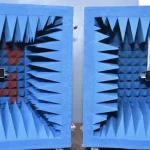
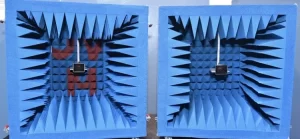
The internal configuration of the room changes based on your testing standards. For instance, a semi-anechoic chamber (which features a reflective ground plane) is highly effective and widely used for standard EMC testing. On the other hand, a full-anechoic chamber lining all six surfaces with absorbers to eliminate reflections requires more material, impacting the total budget.
3. Target Frequency Range
The frequency spectrum you need to test dictates the type and size of the RF absorbers used inside the room.
- Low-frequency testing requires physically larger, deeper absorbers to capture longer wavelengths, which can expand the required outer dimensions of the room.
- High-frequency testing demands high-density, precisely engineered materials to prevent minor leakages.
Because different testing standards require different materials, your frequency profile directly affects the anechoic chamber cost.
4. Shielding Effectiveness and Attenuation Levels
The main job of a chamber is to block outside electromagnetic noise. Achieving higher levels of shielding effectiveness requires heavy-duty shielding panels, specialized RF shielding doors, and high-performance honeycomb vents for ventilation. Investing in premium attenuation materials increases testing accuracy but also shifts the initial investment framework.
5. Automation and Subsystem Integration
A bare chamber is rarely enough for modern testing. Most setups require integrated subsystems to function efficiently, such as:
- Automated heavy-duty turntables
- Antenna mast positioning systems
- RF-over-fiber links and filtered power lines
- Custom test automation software
While these tools greatly improve workflow speed and data accuracy, they are factored into the final system cost.
What is the Typical Cost Range?
Because every setup is engineered for specific compliance standards, the anechoic chamber cost can range anywhere from $25,000 to over $500,000 (roughly ₹20 Lakhs to multiple Crores INR). Small, pre-fabricated benchtop shielding boxes sit at the lower end of the spectrum, while full-scale, multi-meter compliance chambers for automotive or aerospace testing represent the higher end.
How JV Micronics Optimizes Your Testing Investment?
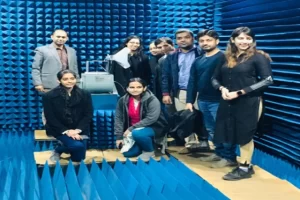 Navigating technical specifications while managing a strict budget can be challenging. As an experienced anechoic chamber manufacturer and provider, JV Micronics helps simplify this process.
Here is how we add value to your project:
- In-House Manufacturing: As a direct manufacturer and supplier, we eliminate middleman markups, ensuring you get premium components at competitive pricing.
- Tailored Engineering: We don’t push standard catalogs. We analyze your specific testing requirements, whether it is MIL-STD, CISPR, or ISO, and design a room that matches those exact needs.
- Strategic Material Selection: Our engineering team optimizes the placement of ferrite tiles and hybrid absorbers, giving you maximum attenuation performance exactly where it is needed without wasting materials.
- End-to-End Support: From initial conceptual layouts and structural mechanical design to final installation, shielding effectiveness testing, and calibration, we manage the entire project lifecycle under one roof.
Conclusion
The total anechoic chamber cost is a reflection of the precision engineering, materials, and custom subsystems required to create a perfect RF-isolated environment. Working with an established supplier ensures that your facility achieves full compliance without unnecessary cost escalations.
If you are planning to build an RF testing facility, partner with a dependable provider like JV Micronics to deliver a high-performance, durable solution built for your business.