What Are EMI Shielding Materials
When it comes to advanced electronic engineering and maintaining flawless electromagnetic compatibility (EMC), protecting components from signal degradation is a critical step. One of the most common topics businesses and engineers explore when designing electronic enclosures is: What are the right materials to block interference, and how does EMI shielding work?
The answer involves understanding how different materials interact with electromagnetic fields. Since electronic devices are tightly packed in modern applications, selecting the right material is essential to prevent system failures and data corruption.
At JV Micronics, we specialize in designing and manufacturing high-performance shielding solutions, ensuring that every project is perfectly aligned with our clients’ technical requirements and compliance standards.
What is EMI Shielding?
Before looking at the technical options, it is important to understand the core process. EMI shielding is any method used to block, reflect, or absorb unwanted electromagnetic interference (EMI) that can disrupt electronic circuits.
Electromagnetic signals are made of electrical and magnetic energy. When these stray waves hit an unprotected circuit, they create internal electrical disruptions. An effective EMI shielding barrier acts as a protective shield. It reflects the incoming waves away, absorbs the energy completely, or safely grounds the unwanted current so the device can operate smoothly alongside other electronics.
Which Materials Are Used for EMI Shielding?
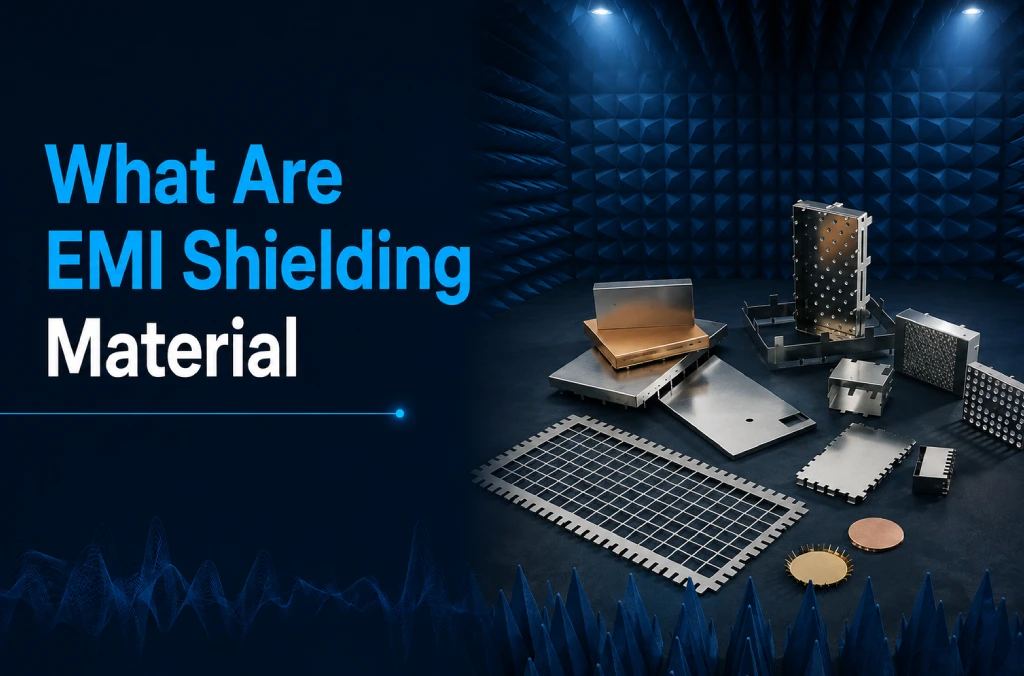
Different applications require different material properties based on frequency, environment, and weight constraints. Here are the primary materials used across the industry today:
1. Solid Metals
Metals are highly effective for EMI shielding because their high electrical conductivity naturally blocks and grounds electromagnetic signals.
- Copper: This is considered the industry standard for high-performance shielding. Copper is exceptionally conductive, making it highly reliable at blocking both electrical and magnetic waves across electronic enclosures and PCBs.
- Aluminum: While slightly less conductive than copper, aluminum offers an excellent strength-to-weight ratio and natural resistance to corrosion. It is widely used in aerospace, automotive, and large structural housings, where keeping weight low is a priority.
- Pre-Tin Plated Steel: This is a cost-effective choice for printed circuit boards (PCBs). Steel provides great low-frequency magnetic protection, while the tin plating allows for seamless soldering and prevents rust.
2. Conductive Elastomers and Gaskets
Solid enclosures often have gaps, doors, or joints where signals can leak. To seal these gaps securely, manufacturers use conductive elastomers.
- Metal-Filled Silicone: Silicone provides excellent environmental sealing against moisture and dust, while embedded particles of silver, nickel, or copper give it the necessary electrical conductivity to maintain the EMI shielding integrity across joints.
3. Conductive Coatings and Paints
When structural housings are made of lightweight plastics, the plastic itself cannot block electromagnetic waves. To fix this, a specialized layer is applied to the inside surface.
- Nickel and Copper Sprays: Conductive paints containing metallic flakes are sprayed onto plastic casings, creating a lightweight conductive skin that delivers reliable EMI shielding without adding the bulk of solid metal frames.
4. Foil Tapes and Fabrics
For quick prototyping, cable wrapping, or sealing small seams during assembly, flexible materials are highly useful.
- Conductive Tapes: Copper or aluminum foil tapes backed with conductive adhesives allow engineers to easily wrap cables or patch minor seams in shielding enclosures.
Factors Affecting Material Selection
Choosing the right material depends heavily on your specific application factors:
- Frequency Range: High-frequency signals (like 5G or Wi-Fi) are easier to reflect with thin conductive layers, whereas low-frequency magnetic fields require thicker materials like steel.
- Environmental Exposure: If a device faces extreme heat, moisture, or salt spray, materials like aluminum or filled silicones are chosen for long-term durability.
- Galvanic Compatibility: Selecting chemically compatible materials prevents corrosion when two different metals touch in the presence of moisture, keeping the EMI shielding intact over time.
Why Choose JV Micronics?
At JV Micronics, we focus on delivering high-performance, reliable, and custom-tailored EMI shielding solutions.
Our approach is based on:
- Understanding your precise technical requirements
- Designing an optimal custom layout for your product housing
- Balancing structural performance with your production budget
This ensures you get the exact shielding material and design required to pass global compliance audits on the first try, without unnecessary cost escalation.
Conclusion
The selection of EMI shielding materials is influenced by multiple technical factors, and there is no single material that fits every electronic project. Each solution must be selected based on frequency, environment, and design requirements, which makes accurate implementation possible only after a detailed evaluation.
If you are looking for a reliable EMI shielding manufacturer, JV Micronics can help you design and deliver the right custom solution for your application.