EMC Testing Procedure: A Step-by-Step Guide for Accurate Compliance Testing
As electronic devices become more advanced, ensuring they operate without causing or experiencing electromagnetic interference is more important than ever. Whether you’re developing consumer electronics, automotive systems, medical equipment, or industrial devices, following the correct EMC testing procedure is essential to meet regulatory standards and ensure reliable product performance.
EMC (Electromagnetic Compatibility) testing verifies that an electronic product can function properly in its intended electromagnetic environment without interfering with other nearby equipment. A structured testing process not only helps manufacturers achieve compliance but also minimizes the risk of costly redesigns and product failures.
At JV Micronics, we specialize in manufacturing advanced EMC testing solutions that help industries perform accurate and reliable compliance testing.
What Is an EMC Testing Procedure?
An EMC test is a systematic process used to evaluate whether an electronic device complies with electromagnetic compatibility standards. The procedure measures both the electromagnetic emissions produced by a device and its ability to withstand external electromagnetic disturbances.
The testing is performed according to international standards such as IEC, CISPR, MIL-STD, and ISO, depending on the product category and industry requirements.
A well-defined EMC testing process ensures that products meet regulatory requirements before entering the market.
Why Is EMC Testing Important?
Modern electronic systems often operate alongside multiple electronic devices. Without proper EMC testing, equipment may generate unwanted interference or fail when exposed to electromagnetic noise.
Benefits of EMC testing include:
- Compliance with international regulations
- Improved product reliability
- Reduced risk of electromagnetic interference
- Enhanced customer confidence
- Faster product certification
- Reduced redesign and production costs
By following the correct testing methodology, manufacturers can launch products with greater confidence.
Step-by-Step EMC Testing Procedure
1. Define Applicable Standards
The first step is identifying the EMC standards applicable to the product. Different industries require different compliance standards based on product application and target markets.
Choosing the correct standard ensures that all required tests are performed accurately.
2. Product Evaluation and Test Planning
Before testing begins, engineers evaluate the product specifications, operating modes, power requirements, and intended environment.
A detailed test plan is prepared to determine:
- Required EMC tests
- Operating configurations
- Test frequencies
- Acceptance criteria
- Measurement methods
Proper planning helps avoid delays during certification.
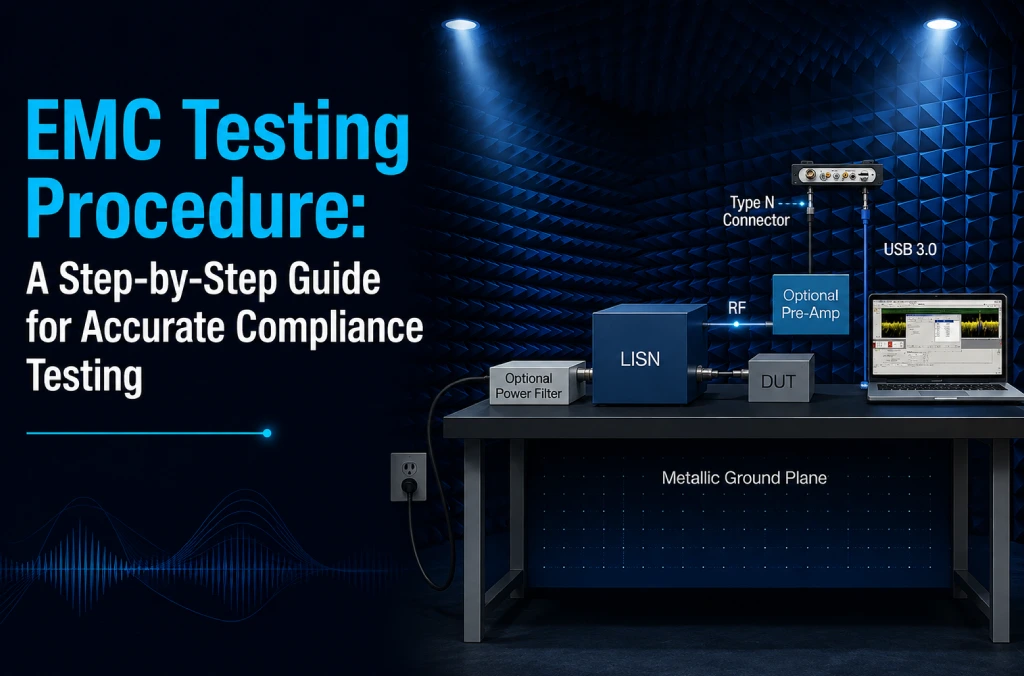
3. Test Environment Preparation
Accurate EMC measurements require a controlled testing environment. Depending on the application, testing may be performed inside:
- Semi-anechoic chambers
- Fully anechoic chambers
- Shielded rooms
- Open Area Test Sites (OATS)
These environments eliminate unwanted external interference and ensure repeatable results.
4. Conduct Emission Testing
Emission testing measures the electromagnetic energy generated by the device.
Typical tests include:
- Radiated emissions
- Conducted emissions
- Harmonic current emissions
- Voltage fluctuations and flicker
The objective is to ensure that the product does not interfere with nearby electronic equipment.
5. Perform Immunity Testing
Immunity testing evaluates how well the product performs when exposed to electromagnetic disturbances.
Common immunity tests include:
- Electrostatic Discharge (ESD)
- Radiated RF Immunity
- Conducted RF Immunity
- Electrical Fast Transient (EFT)
- Surge Immunity
- Voltage Dips and Interruptions
Products must continue operating within acceptable limits during these tests.
6. Analyze Test Results
After completing the testing process, engineers compare the measured values against applicable standards.
If any parameter exceeds the permissible limits, corrective actions such as PCB redesign, improved shielding, grounding optimization, or filtering techniques may be implemented before retesting.
7. Documentation and Certification
The final stage involves preparing detailed test reports documenting:
- Test configurations
- Equipment used
- Measurement data
- Compliance results
- Photographs
- Calibration information
These reports support regulatory approvals and product certification.
Factors That Influence EMC Testing
Several factors affect the effectiveness and accuracy of an EMC testing procedure, including:
Product Design
PCB layout, grounding techniques, shielding, and component placement significantly impact EMC performance.
Testing Environment
High-quality chambers and calibrated equipment ensure precise and repeatable measurements.
Frequency Range
Different products require testing across different frequency ranges, influencing equipment selection and testing methods.
Applicable Industry Standards
Medical, automotive, aerospace, defense, industrial, and consumer electronics all follow different EMC compliance requirements.
Best Practices for Successful EMC Testing
Manufacturers can improve compliance success by following these best practices:
- Consider EMC during product design
- Perform pre-compliance testing early
- Use properly calibrated equipment
- Follow recognized international standards
- Maintain complete documentation
- Work with experienced EMC solution providers
Early testing reduces development costs and shortens time-to-market.
How JV Micronics Helps with EMC Testing Procedure
 At JV Micronics, we are a trusted manufacturer, supplier, provider, and company specializing in advanced EMC testing infrastructure and RF testing solutions. We help organizations establish reliable testing environments that support accurate compliance verification.
Our solutions include:
- EMC Test Chambers
- Semi-Anechoic Chambers
- Fully Anechoic Chambers
- RF Shielded Enclosures
- Customized EMC Testing Solutions
- Chamber Design, Manufacturing, Installation, and Support
Our engineering team works closely with customers to understand their testing requirements and deliver customized solutions that meet international EMC standards while ensuring long-term performance and reliability.
Conclusion
Following the correct EMC testing procedure is essential for ensuring product reliability, regulatory compliance, and successful market entry. A structured testing process helps manufacturers identify potential electromagnetic issues early, reduce redesign costs, and deliver products that perform reliably in real-world environments.
Choosing the right testing infrastructure is equally important. With years of expertise in designing and manufacturing advanced EMC testing solutions, JV Micronics helps organizations build dependable testing environments that support accurate and repeatable results for a wide range of industries.