An anechoic acoustic chamber is a specially designed room that absorbs sound and prevents echoes. It creates a quiet, controlled environment where engineers can measure sound without interference from reflected noise or outside activity. These chambers support product testing, acoustic research, noise analysis and accurate audio measurements.
Unlike a normal room, an anechoic chamber does not allow sound waves to bounce from the walls, ceiling or floor. This makes it easier to study the true sound produced by a machine, speaker, vehicle component or electronic device.
What Is an Anechoic Acoustic Chamber?
An anechoic acoustic chamber is an isolated room built to create free-field sound conditions. The word “anechoic” means without echoes.
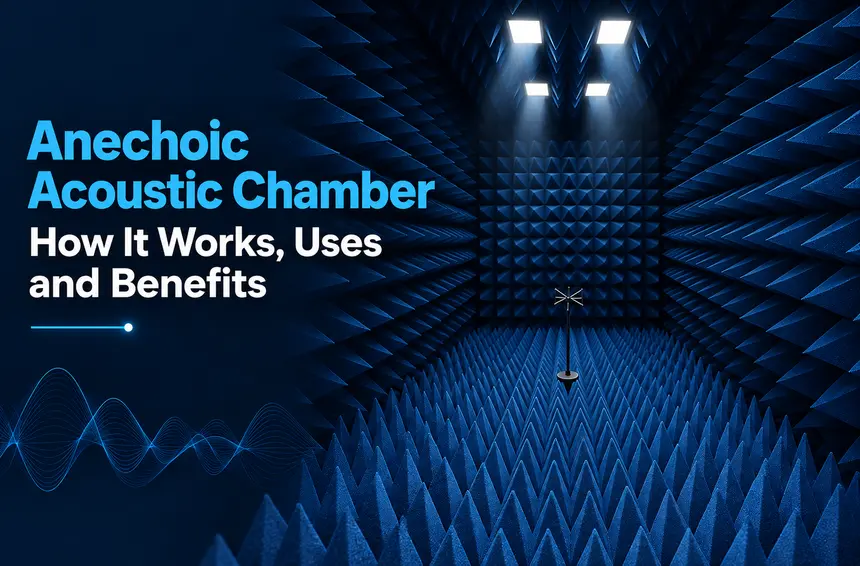
Inside a normal room, sound reflects from hard surfaces. These reflections mix with the original sound and can affect measurement results. An anechoic chamber uses deep acoustic wedges and sound-isolation methods to absorb these reflections.
The chamber also limits noise entering from outside. As a result, microphones and sound-measuring instruments can record the original sound source more accurately.
In simple terms, an anechoic chamber helps engineers hear and measure sound without interference from the surrounding environment.
How Does an Anechoic Acoustic Chamber Work?
An anechoic acoustic chamber works by controlling both internal sound reflections and external noise.
When a sound wave reaches an acoustic wedge, the wedge guides the energy deeper into its absorbing material. The sound energy gradually changes into a very small amount of heat instead of reflecting into the room.
The chamber structure also uses thick walls, sealed doors and vibration-control systems. These features help block traffic, machinery, conversations and building vibrations.
A complete chamber commonly controls sound in three ways:
- Sound absorption: Acoustic wedges absorb sound inside the room.
- Noise isolation: Heavy walls and sealed openings reduce outside noise.
- Vibration control: Isolated foundations or mounts limit structural vibration.
Together, these features create a stable environment for repeatable acoustic testing.
Main Components of an Anechoic Acoustic Chamber
Acoustic Wedges
Acoustic wedges cover the walls and ceiling. Some chambers also have wedges below the floor.
Their pointed shape helps absorb sound across a wide frequency range. The length and material of the wedges depend on the lowest frequency that the chamber needs to control.
Isolated Room Structure
The chamber may use a room-within-a-room design. The inner testing room remains physically separated from the main building structure. This separation helps reduce noise and vibration transfer.
Soundproof Door
A normal door would allow sound to enter or escape. Therefore, an anechoic chamber needs a heavy acoustic door with tight seals.
The door must provide noise isolation without creating reflective areas that affect the test environment.
Suspended Mesh Floor
A fully anechoic chamber may use a suspended mesh floor. Engineers and test equipment can stand on the mesh while sound-absorbing wedges continue underneath it.
This design allows sound absorption from every direction.
Ventilation and Cable Openings
Testing equipment and people can generate heat. The room therefore needs ventilation. However, standard air ducts may carry noise into the chamber.
Special acoustic silencers allow airflow while limiting unwanted sound. Cable openings also require careful sealing to protect the chamber’s acoustic performance.
What Is an Anechoic Acoustic Chamber Used For?
An anechoic acoustic chamber supports any application that requires accurate sound measurement under controlled conditions.
Common uses include:
- Testing loudspeakers, microphones and headphones
- Measuring noise from appliances and electronic devices
- Evaluating vehicle parts and automotive components
- Measuring sound power and frequency response
- Testing fans, motors, pumps and industrial machinery
- Studying product vibration and noise
- Supporting architectural and acoustic research
- Conducting human hearing and sensory studies
- Comparing prototypes during product development
For example, a company testing a cooling fan needs to know how much noise the fan produces. Testing it in a normal room could include echoes, air-conditioning noise and activity outside the room. An anechoic chamber removes most of these unwanted influences.
Fully Anechoic vs Semi-Anechoic Chambers
A fully anechoic chamber has sound-absorbing treatment on the walls, ceiling and floor. It may use a mesh floor above the lower acoustic wedges. This setup creates free-field conditions in almost every direction.
A semi-anechoic chamber has an acoustically reflective solid floor. The walls and ceiling still use sound-absorbing treatment. This design works well when the test object must sit on a hard surface, such as a vehicle, machine or household appliance.
The best chamber type depends on:
- The size and weight of the test object
- The required frequency range
- The testing standard
- The available room dimensions
- The required background noise level
- Whether a reflective floor is needed
Acoustic Chambers vs RF Anechoic Chambers
An acoustic chamber and an RF anechoic chamber serve different purposes.
An anechoic acoustic chamber controls sound waves. It normally uses porous acoustic wedges made from materials such as foam or fibreglass.
An RF anechoic chamber controls electromagnetic waves. It uses RF absorbers and shielding to support antenna, wireless and EMC testing.
Some facilities require both acoustic and electromagnetic control. However, engineers must design each system according to the type of energy being measured.
You can learn more about the general chamber concept in this guide explaining what an anechoic chamber is and how it works.
Benefits of Anechoic Acoustic Testing
Testing inside a controlled chamber provides several practical benefits:
- More accurate sound measurements
- Less interference from background noise
- Better comparison between products
- Repeatable testing conditions
- Easier detection of unwanted sounds
- Reliable frequency-response analysis
- Improved product development and quality control
- Clearer data for technical reports
These benefits help engineers identify noise problems early. They can then improve materials, product structures or moving components before production begins.
Important Design Considerations
The performance of an anechoic acoustic chamber depends on careful planning.
The chamber must be large enough to provide a suitable measurement area around the test object. The acoustic wedges must support the required frequency range. Ventilation, lighting, doors and cable access must also work without increasing background noise.
Engineers should consider:
- Target frequency range
- Chamber size and test distance
- Required background noise level
- Acoustic wedge depth
- Door and ventilation performance
- Floor type
- Equipment dimensions and weight
- Microphone and test-object positions
- Applicable testing standards
A well-planned chamber provides more reliable results and reduces the need for future modifications.
Why Do Anechoic Chambers Feel So Quiet?
In a highly controlled chamber, people may notice sounds they normally ignore. These can include breathing, clothing movement, stomach sounds and even a heartbeat.
This happens because the room removes most external noise and reflected sound. The brain receives fewer environmental sound cues, making internal body sounds more noticeable.
Read about similar experiences in the Quietest Room in the World Challenge and the famous Minnesota anechoic chamber.
Frequently Asked Questions
What does an anechoic acoustic chamber measure?
It helps measure sound power, frequency response, directivity, vibration-related noise and overall acoustic performance.
Is an anechoic chamber completely silent?
No chamber is perfectly silent. However, a well-designed chamber can achieve an extremely low background noise level and greatly reduce sound reflections.
Why are acoustic wedges pointed?
The pointed shape gradually absorbs sound energy and reduces reflections across a wider frequency range.
Can people enter an anechoic chamber?
Yes. People can enter most chambers during demonstrations, research or testing. However, access rules depend on the chamber design and facility.
What is the difference between soundproof and anechoic?
Soundproofing blocks noise from entering or leaving a room. Anechoic treatment absorbs sound reflections inside the room. An effective chamber normally uses both methods.
Final Thoughts
An anechoic acoustic chamber creates a controlled environment for accurate sound measurement. Its acoustic wedges, isolated structure, sealed openings and vibration-control features reduce echoes and external noise.
This makes the chamber valuable for audio testing, product development, industrial noise analysis, automotive research and scientific studies. Selecting the right chamber type, frequency range and test setup helps ensure accurate, repeatable and useful results.
For a general business overview, you can also view the JV Micronics company profile.