Where is World’s Quietest Room?
The world’s quietest room is an anechoic chamber at Orfield Laboratories in Minneapolis, Minnesota, USA.
The chamber is designed to block external noise and absorb internal sound reflections.
Why is it called the Quietest Room On Earth?
It is commonly described as the quietest room on Earth because its background noise level can fall below the threshold of human hearing.
Inside, visitors may hear their heartbeat, breathing, footsteps, and other internal body sounds.
The quietest room in the world challenge tests how long a person can tolerate this extreme silence.
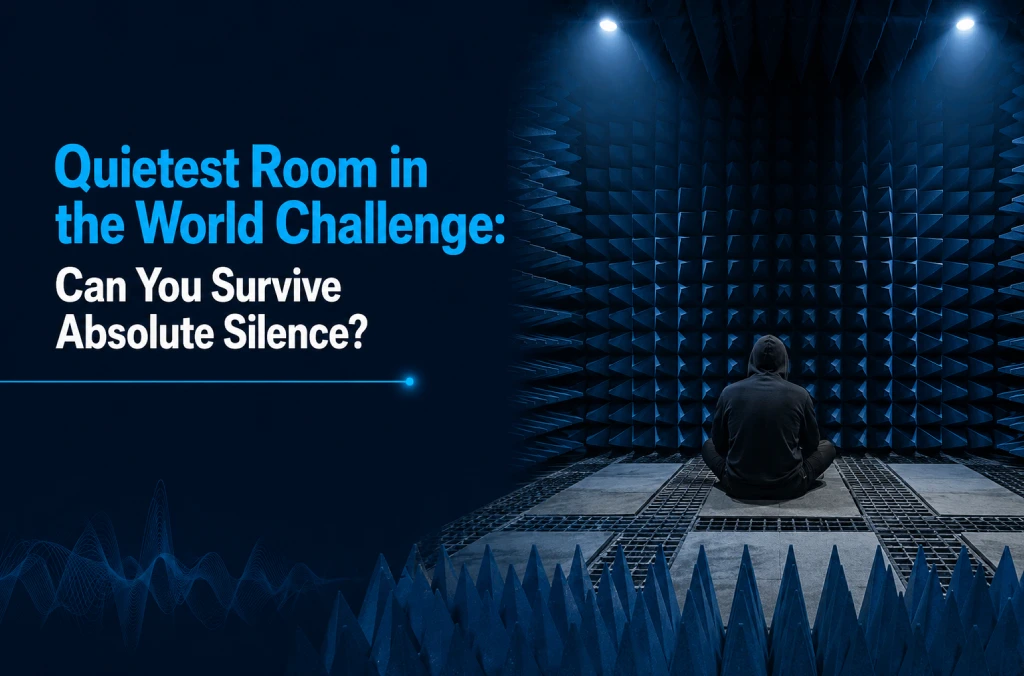
Quietest Room in the World Challenge: Can You Survive Absolute Silence?
Have you ever wondered what absolute silence actually feels like? For most of us, daily life is full of a constant background hum. But there is an environment where sound completely dies, giving rise to what many call the Quietest Room in the World Challenge.
This legendary silent room challenge takes you to an unassuming building in Minneapolis, Minnesota. Tucked away in the Seward neighborhood sits Orfield Laboratories, home to a world-famous anechoic chamber (a specialized soundless chamber) so silent that Guinness World Records officially recognized it as “The Quietest Place on Earth.”
How Quiet Is the Quietest Room on Earth?
The quietest room on Earth is engineered to reduce background noise to an extremely low level, sometimes below the normal threshold of human hearing. Inside the chamber, visitors may hear sounds that are normally masked by background noise, including their heartbeat, breathing, footsteps, and stomach movements.
As a leading anechoic chamber manufacturer and technology company, JV Micronics understands the complex science required to eliminate ambient noise. Below, we look at the fascinating physics of this world-record space and how professional engineering creates these ultra-silent environments.
Inside the Soundless Chamber: The Mechanics of the Quietest Room in the World Challenge
The chamber at Orfield Laboratories was measured at an astonishing negative 24.9 decibels ($dB$) during tests. To put that into perspective:
- 0 dB: The standard threshold of human hearing.
- 30 dB: A quiet, regular bedroom at night.
- -24.9 dB: The Orfield chamber, sitting nearly 25 decibels below what your ears can biologically perceive.
This deep level of insulation means the room absorbs 99.99% of all sound. When people try the Quietest Room in the World Challenge, they quickly discover that the silence is deafening. With no external sounds, your ears adapt, and you begin to hear your own body: your heartbeat thumping, blood rushing through your vessels, your stomach gurgling, and even the soft click of your eyelids when you blink.
The Engineering Behind the Silent Room Challenge
Replicating an environment that forces people to confront the silent room challenge requires extreme structural design. The Orfield soundless chamber is built using a complex “room within a room within a room” architecture:
- The Outer Shell: A thick concrete shell with foot-thick walls blocks initial environmental noise.
- The Mid Structure: A larger steel chamber acts as a secondary buffer.
- The Core Chamber: A small steel box suspended entirely on vibration-absorbing springs.
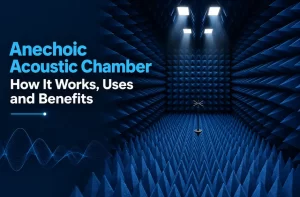
- The Acoustic Lining: Every interior surface, including the floor, which is a suspended mesh grid, is lined with 85 cm fiberglass wedges that swallow sound waves and prevent reflections.
Why Can’t People Stay in the World’s Quietest Room?
The chamber has a notorious reputation. Most visitors attempting the Challenge cannot last more than 45 minutes.
Because we rely on ambient sound reflections to orient our bodies and maintain balance, removing all acoustic cues completely confuses the brain. Within 20 minutes, many people experience disorientation and must sit down. The longest anyone has officially stayed inside this specific soundless chamber is just 1 hour and 26 minutes, a record set by YouTuber Callum McGinley in 2019.
The quietest room in the world challenge is difficult because the absence of external sound makes people intensely aware of their own body sounds and movements.
Is the Quietest Room in the World a Real Challenge?
Yes. The quietest room in the world challenge is not difficult because of physical obstacles, but because of the psychological effects of extreme silence. As the brain adjusts to the lack of background noise, ordinary internal sounds can feel unusually loud and distracting. This can cause discomfort, disorientation, anxiety, or difficulty maintaining balance.
Visiting Orfield Laboratories: Pricing & Access
If you are planning a trip to the US and want to experience the Quietest Room yourself, Orfield Laboratories opens the lab to the public by appointment:
- Standard Group Tour ($200 per person): A 90-minute guided tour covering the history of the facility (which was originally Sound 80 Studios, where Prince and Bob Dylan recorded) and a 20-minute session inside the chamber.
- Private Silent Session ($75+ per person): A targeted session where a small group of 4 to 6 people is sealed inside the soundless chamber for 30 to 60 minutes in complete silence and complete darkness, if you are brave enough.
What is the world’s quietest room?
The world’s quietest room is a specially constructed anechoic chamber that blocks external noise and absorbs sound reflections from its internal surfaces.
Where is the quietest room on Earth?
The quietest room on Earth is located inside an advanced anechoic chamber. Different facilities have held or claimed the record at different times, depending on their measured sound levels and certification.
How long can a person stay in the quietest room?
The length of time varies from person to person. Many visitors find it difficult to remain inside for an extended period because they become highly aware of internal body sounds and may experience discomfort or disorientation.
How JV Micronics Helps as a Top Anechoic Chamber Provider
While the public loves the thrill of a Quietest Room in the World Challenge, these spaces are critical working tools for modern engineering. This level of extreme isolation is mandatory for testing audio products, calibrating precise microphones, validating EMI/EMC compliance, and mapping antenna performance.
This is where JV Micronics steps in. As a leading anechoic chamber manufacturer, supplier, and engineering company based in Faridabad, Haryana, we bring world-class precision to the development of custom testing environments.
Why Choose JV Micronics?
Established in 2011 and ISO 9001:2015 certified, JV Micronics specializes in the indigenous manufacturing of high-performance acoustic and RF-shielded systems. We provide comprehensive solutions, including:
- Engineered RF and Microwave Absorbers with a proven product life of over 25 years.
- Full-scale EMI/EMC Shielded Chambers designed to comply with international standards like IEEE, MIL, CISPR, ANSI, and EN.
- Portable Anechoic Boxes and automated turntables for precise data collection.
- Turnkey Delivery & Full Support from initial design through to installation, commissioning, and AMC (Annual Maintenance Contracts).
Our custom-built facilities serve the most demanding sectors globally, including Defence, Aerospace, Telecom, and Automotive engineering. JV Micronics is a trusted provider and partner to prominent organizations such as the Indian Air Force, DRDO, ISRO, HAL, BEL, and leading IITs, with successful exports to markets including the USA, Brazil, and Poland.
Whether you are looking to design a commercial-grade soundless chamber or specialized RF shielding to run your own acoustic performance tests, we deliver custom environments engineered to scientific precision.